
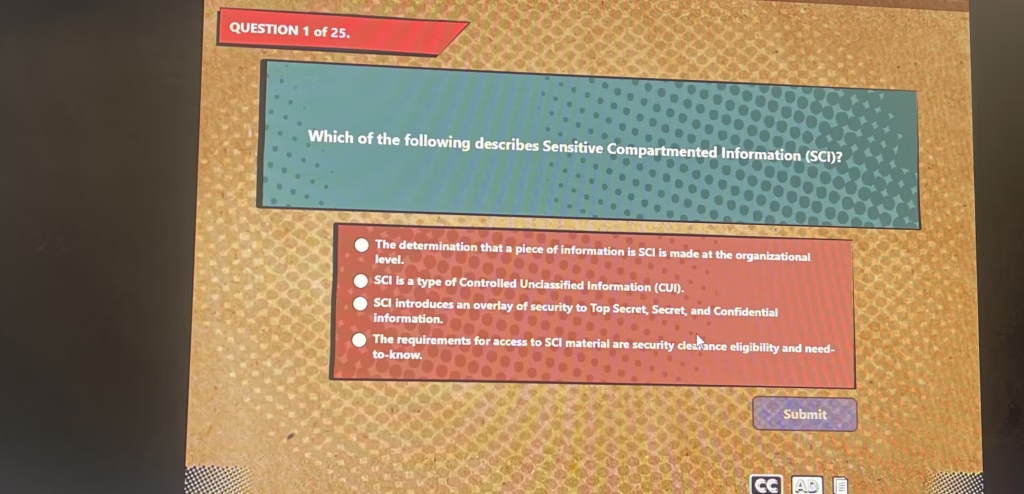
The correct answer is: Sensitive Compartmented Information (SCI) is classified intelligence information concerning sources, methods, or analytical processes that is protected by compartmented access controls — it requires an appropriate security clearance plus formal SCI access (indoctrination) and strict need-to-know.
Explanation
- SCI is not a classification level (like Confidential/Secret/Top Secret); it is an additional control applied to classified intelligence that requires compartmentalization.
- SCI protects information about sensitive intelligence sources and methods (for example, certain SIGINT or HUMINT product) by placing it into compartments or codeword-controlled compartments.
- Access to SCI requires: (1) a favorable background investigation and appropriate clearance (typically Top Secret), (2) formal indoctrination/grant of SCI access for the specific compartment(s), and (3) a demonstrated need-to-know. A Top Secret clearance alone does not automatically authorize SCI access.
- SCI must be stored, discussed, and transmitted only in approved environments (e.g., SCIFs — Sensitive Compartmented Information Facilities) and only to personnel authorized for the applicable compartments.
- Related concept: Special Access Programs (SAPs) are another form of enhanced protection; SAPs and SCI both create extra access controls but are administratively distinct.
Summary: SCI = classified intelligence subject to special compartmental controls and access procedures to protect sensitive sources/methods.