
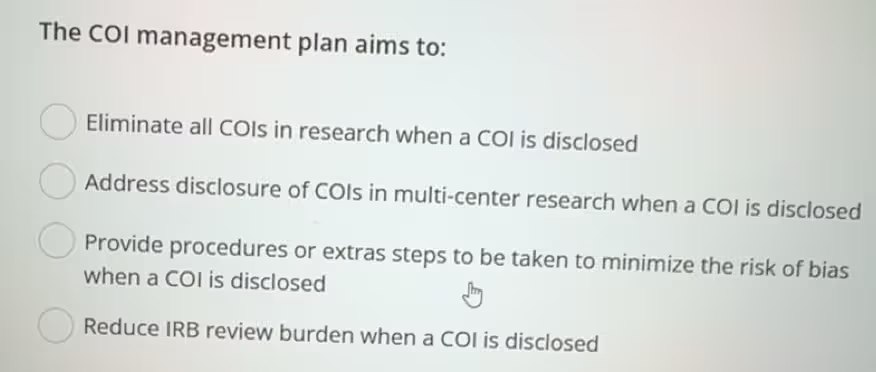
The COI management plan aims to prevent, minimize, and manage conflicts of interest so that research and decisions remain objective, participant safety and welfare are protected, and public trust and institutional integrity are maintained.
Explanation
A Conflict of Interest (COI) management plan sets out how identified conflicts will be handled. Its primary goals are:
- Protect research integrity and objectivity — ensure scientific design, data collection, analysis, interpretation, and reporting are not biased by secondary interests (e.g., financial gain).
- Protect human subjects and safety — prevent situations where an investigator’s interest could harm participant welfare or influence recruitment/treatment decisions.
- Ensure transparency and accountability — require disclosure of relevant interests to institutions, oversight bodies, study teams, journals, funders, and, when appropriate, participants.
- Reduce or eliminate undue influence — apply controls so decisions are based on best evidence and ethics, not on personal or financial incentives.
- Maintain public and stakeholder trust — demonstrate that potential conflicts are recognized and actively managed.
Typical components of a COI management plan
- Identification and disclosure — who has what interest, its magnitude, timing, and relation to the project.
- Risk assessment — evaluate how the interest could affect the project or participants.
- Management measures — concrete actions such as:
- removing the conflicted individual from certain roles (e.g., data analysis, recruitment, consent),
- requiring independent oversight (e.g., independent data monitoring committee),
- limiting access to data or funds,
- divesting financial interests or placing them in blind trusts,
- publicly disclosing conflicts in publications and consent forms.
- Monitoring and reporting — periodic review, compliance checks, and mechanisms for reporting breaches.
- Documentation — written plan kept on file and attached to approvals (IRB/ethics committee).
- Education — training for investigators and staff about COI policies.
Example outcome
A good COI management plan lets the research proceed while ensuring safeguards (e.g., independent statisticians analyze outcomes) so results remain credible and participants are protected.