
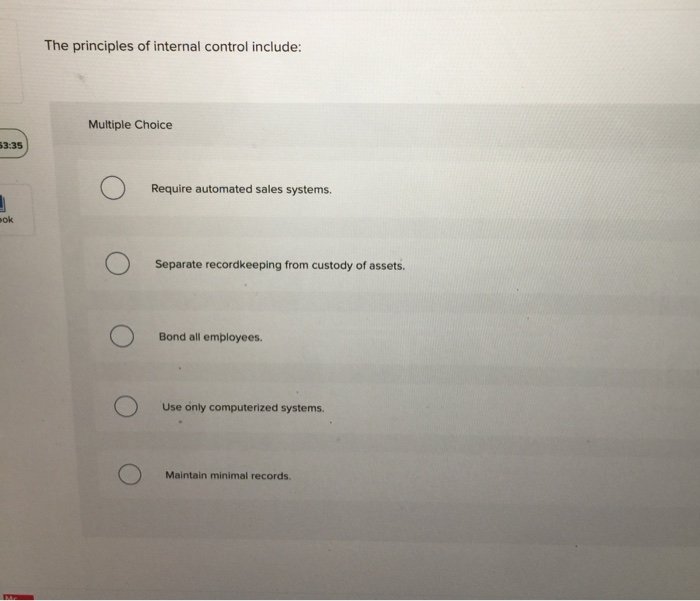
Answer: Separate recordkeeping from custody of assets.
Explanation:
Subject: Accounting — internal control. The relevant concept is segregation of duties (also called separation of responsibilities), a core internal control principle that requires different people to handle authorization, recordkeeping, and custody of assets to reduce errors and fraud. Other common internal control principles include establishment of responsibility, documentation procedures, physical controls, independent internal verification, and HR controls (e.g., bonding, rotation of duties).
Why this choice is correct: If the person who has physical custody of assets also maintains the records, they can conceal theft or mistakes. Separating custody and recordkeeping creates checks and reduces opportunity for misappropriation.
Why the other choices are incorrect:
- Require automated sales systems: Automation can help, but it is not a principle of internal control and is not required.
- Bond all employees: Bonding (insurance against employee theft) is a control measure for some positions but not a fundamental internal control principle applicable to all employees.
- Use only computerized systems: Not a principle; internal controls apply to both manual and computerized systems.
- Maintain minimal records: Opposite of good control — accurate, complete records are required for effective internal control.