
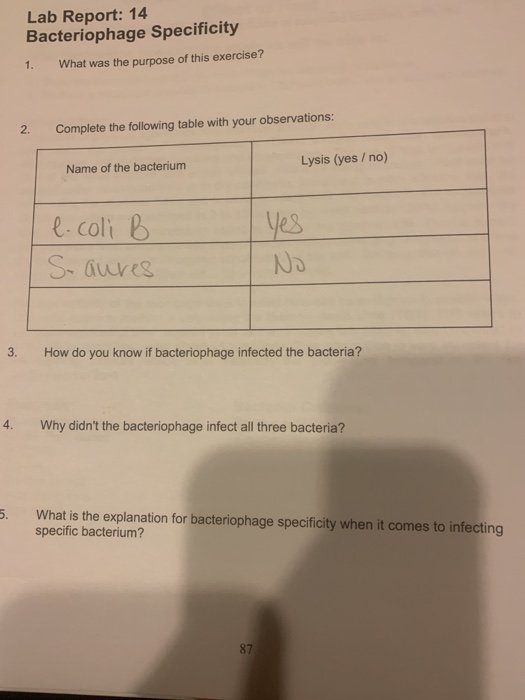
The subject of this image is Biology, specifically focusing on bacteriophage specificity.
Answer:
Q1: The purpose of this exercise is to understand the specificity of bacteriophages in infecting certain bacteria.
Q2: The table is already completed with observations:
- E. coli B: Yes
- S. aureus: No
Q3: You know if a bacteriophage infected the bacteria by observing lysis, which is the breakdown of the bacterial cell wall, leading to cell death.
Q4: The bacteriophage didn’t infect all three bacteria due to specificity; it can only infect bacteria with compatible receptors.
Q5: Bacteriophage specificity is explained by the presence of specific receptors on the bacterial surface that the phage can bind to, allowing infection.
Explanation:
Bacteriophages are viruses that infect bacteria. They are highly specific to their host bacteria due to the presence of specific receptors on the bacterial cell surface that the phage can recognize and bind to. This specificity is crucial for the phage’s ability to inject its genetic material into the host cell.
Steps:
- Purpose of Exercise:
- Understand how bacteriophages recognize and infect specific bacterial hosts.
- Observations:
- E. coli B shows lysis, indicating successful infection.
- S. aureus does not show lysis, indicating no infection.
- Infection Identification:
- Lysis of bacterial cells is a clear indicator of infection. This can be observed as clear zones (plaques) on a bacterial lawn.
- Specificity Reasoning:
- Bacteriophages have tail fibers that bind to specific receptors on the bacterial surface. If these receptors are absent or different, the phage cannot attach and infect the bacterium.
- Explanation of Specificity:
- The interaction between phage tail fibers and bacterial receptors is highly specific. This specificity determines which bacteria a phage can infect, similar to a lock and key mechanism.