
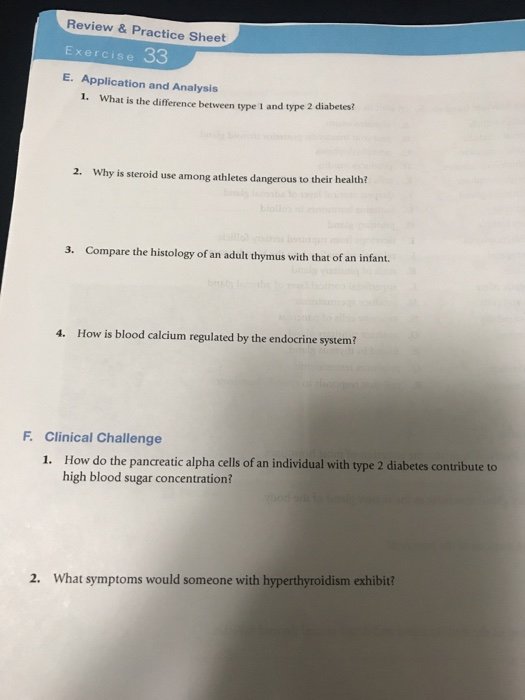
The questions in the image pertain to Biology and Medicine, focusing on topics like diabetes, steroid use, histology, endocrine regulation, and thyroid disorders. Here’s a detailed analysis:
Q1: What is the difference between type 1 and type 2 diabetes?
Answer: Type 1 diabetes is an autoimmune condition where the body attacks insulin-producing beta cells in the pancreas, leading to little or no insulin production. Type 2 diabetes is characterized by insulin resistance, where the body doesn’t use insulin properly, often accompanied by a gradual decline in insulin production.
Explanation: Type 1 diabetes typically manifests early in life and requires insulin therapy. Type 2 diabetes is more common in adults and is often associated with lifestyle factors such as obesity and physical inactivity.
Steps:
- Type 1: Autoimmune destruction of beta cells → No insulin production.
- Type 2: Insulin resistance → Inefficient glucose uptake → Possible insulin deficiency over time.
Q2: Why is steroid use among athletes dangerous to their health?
Answer: Steroid use can lead to serious health risks including cardiovascular problems, liver damage, hormonal imbalances, and psychological effects.
Explanation: Anabolic steroids can increase muscle mass but also elevate risks of heart disease, liver abnormalities, and mood disorders. They disrupt normal hormone production, leading to side effects like infertility and secondary sexual characteristic changes.
Steps:
- Cardiovascular risks: Increased cholesterol, hypertension.
- Liver damage: Hepatic tumors, jaundice.
- Hormonal effects: Infertility, gynecomastia.
- Psychological effects: Aggression, depression.
Q3: Compare the histology of an adult thymus with that of an infant.
Answer: The thymus in infants is larger and more active, with a dense population of lymphocytes. In adults, it is smaller and largely replaced by adipose tissue.
Explanation: The thymus is crucial for T-cell development in early life. As individuals age, the thymus undergoes involution, reducing its immune function and becoming more fatty.
Steps:
- Infant thymus: Large, active, lymphocyte-rich.
- Adult thymus: Smaller, fatty infiltration, reduced lymphocyte presence.
Q4: How is blood calcium regulated by the endocrine system?
Answer: Blood calcium levels are regulated by parathyroid hormone (PTH), calcitonin, and vitamin D.
Explanation: PTH increases blood calcium by stimulating bone resorption, increasing renal reabsorption, and activating vitamin D. Calcitonin lowers blood calcium by inhibiting bone resorption.
Steps:
- Low blood calcium → PTH release → Bone resorption, renal reabsorption, vitamin D activation.
- High blood calcium → Calcitonin release → Inhibition of bone resorption.
Q5: How do the pancreatic alpha cells of an individual with type 2 diabetes contribute to high blood sugar concentration?
Answer: Alpha cells secrete glucagon, which raises blood glucose levels. In type 2 diabetes, glucagon secretion can be dysregulated, contributing to hyperglycemia.
Explanation: In type 2 diabetes, insulin resistance can lead to inappropriate glucagon secretion, exacerbating high blood sugar levels by promoting gluconeogenesis and glycogenolysis in the liver.
Steps:
- Insulin resistance → Impaired suppression of glucagon.
- Excess glucagon → Increased hepatic glucose production.
Q6: What symptoms would someone with hyperthyroidism exhibit?
Answer: Symptoms of hyperthyroidism include weight loss, increased appetite, heat intolerance, anxiety, tremors, and palpitations.
Explanation: Hyperthyroidism results from excessive thyroid hormone production, accelerating metabolism and affecting multiple body systems.
Steps:
- Metabolic acceleration → Weight loss, increased appetite.
- Nervous system effects → Anxiety, tremors.
- Cardiovascular effects → Palpitations, heat intolerance.